Starting Jodo
Your First Steps on the Path
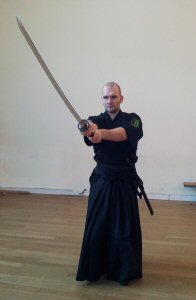
 A photo of me starting jodoA photo of me starting jodo
Starting Jodo - the Japanese martial art of the short staff - can seem intimidating at first. Between the unfamiliar Japanese terminology, the traditional etiquette, and the precise technical requirements, newcomers often feel uncertain about how to begin. This article aims to demystify those first steps, providing practical information and encouragement for those interested in exploring this fascinating “national treasure” martial art.
Overview
Here's a quick overview of Starting Jodo:
Starting Jodo Step 1 - Finding a Qualified Instructor and Legitimate Dojo
- Finding a Qualified Instructor and Legitimate Dojo
- What to Look For in an Instructor
- Finding a Dojo
- What to Observe When Visiting a Dojo
Starting Jodo Step 2 - What to Wear?
- Appropriate Clothing Before Investing in Hakama
- For Your First Classes
- When You're Ready to Commit
Starting Jodo Step 3 - Your First Jō:
- Selecting Quality Equipment
- Standard Specifications
- Materials and Quality Considerations
- Maintenance and Care
Starting Jodo Step 4 - Etiquette and Reigi
- Navigating Traditional Aspects with Confidence
- The Purpose of Formality
- Essential Etiquette for Beginners
Starting Jodo Step 5 - Basic Warm-up Exercises Specific to Jōdō
- Cardiovascular Preparation
- Joint Mobility
- Jōdō-Specific Exercises
Starting Jodo Step 6 - The Importance of Patience and Consistent Practice
- The Value of Repetition
- Creating a Sustainable Practice Routine
- Setting Realistic Expectations for Progress
- The First Few Months
- The First Year
- Long-Term Development
Starting Jodo - The Final Step
Starting Jodo Step 1 - Finding a Qualified Instructor and Legitimate Dojo
“It’s also essential to train under a good instructor, thoroughly practice the basics, build a solid foundation, and integrate theory with basic techniques to hasten progress. By respecting the guidance of your teacher and seniors, and through personal research and creative effort, one can endure strict training — this is the key to mastery.”
- Kaminoda Tsunemori (1)
The single most important factor in your jōdō journey will be finding proper instruction. Unlike some modern martial arts that can be partially learned through videos or books, jōdō requires hands-on guidance from an experienced teacher. The subtle details of distance, timing, and body positioning are nearly impossible to grasp without direct feedback.
What to Look For in an Instructor
When seeking jōdō instruction, look for teachers affiliated with recognised organisations such as:
- The All Japan Kendo Federation (ZNKR) - The organisation that standardised modern jōdō
- International Kendo Federation (FIK) - The global governing body for kendo, iaidō, and jōdō
- A legitimate Shindo Musō Ryu lineage - The traditional school from which modern jōdō developed, or from other legitimate koryu (old school) such as Suio Ryu.
Qualified instructors typically hold formal teaching ranks (renshi, kyoshi, or hanshi) or traditional certifications (menkyo kaiden or similar) from these organisations. Don't hesitate to respectfully ask about a potential teacher's background and credentials.
In my country, my training partner and I are the top ranked instructors in ZNKR jōdō, currently Yondan, and as such have no shogo (renshi, kyoshi, or hanshi). We have essentially introduced jōdō to our country. Other developing countries may have the most senior rank be a shodan. Needs must, but any instructor should be able to show their connection to and endorsement from a higher ranked teacher.
Beyond formal qualifications, observe the instructor's teaching style. Do they provide clear explanations and demonstrations? Do they offer specific, constructive feedback? Do they create a positive learning environment while maintaining appropriate formality? These qualities will significantly impact your learning experience.
Finding a Jōdō Dojo
Several approaches can help you locate jōdō instruction in your area:
- National Kendo Organizations: Most countries have a national kendo federation that can provide information about affiliated jōdō clubs.
- Japanese Cultural Centres: Many cities with significant Japanese communities have cultural centres that may offer traditional martial arts classes.
- University Clubs: Some universities have martial arts clubs that include jōdō among their offerings.
- Iaidō Dojos: Since many practitioners study both iaidō and jōdō, existing iaido dojos may either offer jōdō classes or be able to refer you to jōdō instruction.
- Seminars and Workshops: In areas without regular jōdō classes, occasional seminars may provide an introduction to the art and connections to broader practice communities.
If you find multiple options, consider visiting each as an observer before committing. Most legitimate dojos welcome observers and encourage potential students to watch a class before joining.
What to Observe When Visiting a Dojo
When you visit a potential dojo, pay attention to these factors:
- Training Atmosphere: Is there appropriate formality without being overly rigid or intimidating?
- Student Progress: Do you see students at various skill levels making visible progress?
- Safety Practices: Are proper safety measures observed during paired practice?
- Teacher-Student Interactions: Does the instructor provide individual attention and corrections?
- Community Feel: Does the dojo foster a supportive community among practitioners?
Remember that jōdō training traditionally follows a formal structure with emphasis on proper etiquette. However, this formality should create a framework for respectful learning rather than an atmosphere of fear or intimidation.
Starting Jodo Step 2 - What to Wear?
Appropriate Clothing Before Investing in Hakama
One advantage of beginning jōdō is that specialised clothing isn't immediately required. For your first few classes, most dojos will allow you to practice in comfortable athletic clothing that permits free movement.
For Your First Classes
Appropriate attire for initial classes typically includes:
- Loose-fitting sweatpants or athletic pants (dark colored is preferable)
- A plain t-shirt or sweatshirt without large logos or graphics
- Clean indoor athletic shoes or tabi (split-toe socks) if practising on tatami mats; however, jōdō is usually practised barefoot and on hardwood floors.
Avoid clothing with zippers, buttons, or other hard elements that might damage the jō or cause injury during practice. Similarly, remove watches, jewellery, and other accessories before training.
When You're Ready to Commit
After attending several classes and deciding to continue training, you'll want to invest in traditional training attire:
- Keikogi (Practice Jacket): An indigo cotton jacket similar to those used in kendō, or a light white top similar to those used in certain lines of Iaidō.
- Hakama: The pleated, skirt-like pants traditionally worn in many Japanese martial arts, usually indigo or white.
- Obi (Belt): A wide cotton belt worn under the hakama
For beginners, a cotton hakama in dark blue/indigo is appropriate. Synthetic hakama are also available and require less maintenance, though they lack the traditional appearance of cotton. Your instructor can recommend suitable options based on your training needs and budget.
When purchasing a hakama, ensure it's the correct length - the hem should just touch the tops of your feet when standing. Too long, and you'll trip; too short, and it will ride up during practice. Many martial arts suppliers offer sizing guides to help with this selection.
Starting Jodo Step 3: Your First Jō
Selecting Quality Equipment
The jō is your primary training tool in jōdō, so selecting an appropriate one deserves careful consideration. While borrowing a jō for initial classes is common, having your own becomes important as you progress.
Standard Specifications
The standard jo for ZNKR jōdō has these specifications:
- Length: 128 cm (approximately 50.4 inches)
- Diameter: 2.4 cm (approximately 0.94 inches)
- Material: White oak (shiro kashi) is standard for formal practice and examinations.
“A saying of the Jo
The stick became a soldier's stick. In other words, it became a weapon. It became round. Then the form was complete. The shape was fixed. It became hard and tough. And the material was wood”.
- Yoneno Kotaro and Hiroi Tsunetsugu (2)
Materials and Quality Considerations
Jō are available in various materials and quality levels:
- White Oak: The traditional and preferred material. High-quality white oak jō offer excellent feedback during practice and develop a beautiful patina over time. While more expensive initially, they typically last for many years with proper care. Ideally, the grain should be as straight and tight as possible.
- Red Oak: Less expensive than white oak but heavier and more prone to splintering/shattering. Acceptable for beginners but not ideal for long-term use.
- Other Hardwoods: Jō made from hardwoods like hickory or purple heart can be functional but may not meet specifications for formal examinations.
- Composite Materials: Some manufacturers offer jō made from compressed wood or synthetic materials. These are generally not recommended for serious practice as they lack the proper weight, balance, and feedback of traditional wooden jods.
For beginners, a mid-range white oak jo represents the best balance of quality and value.
Maintenance and Care

Proper care extends the life of your jo and prevents injuries from splinters:
- Sanding: Periodically sand your jō lightly with fine-grit sandpaper to remove splinters and maintain a smooth surface.
- Oiling: Apply boiled linseed oil or tsubaki oil occasionally to prevent the wood from drying out and cracking. Apply sparingly and wipe off excess.
- Storage: Store your jō in a dry place away from direct sunlight and extreme temperatures, which can cause warping.
- Inspection: Regularly inspect your jō for cracks, splinters, or other damage, particularly after heavy use.
- Cleaning: Wipe down your jō with a clean cloth (or magic sponge!) after practice to remove oils and sweat that can deteriorate the wood over time.
With proper care, a quality jō can serve you for many years of practice.
The Purpose of Formality
Formal procedures in jōdō serve several important functions:
- Creating Mental Readiness: The ritual of bowing in at the beginning of class helps practitioners transition from everyday concerns to focused training.
- Ensuring Safety: Standardised procedures for handling weapons and interacting with partners reduce the risk of accidents.
- Honouring Tradition: Formal etiquette connects modern practitioners to the historical lineage of the art, preserving cultural heritage.
- Building Community: Shared protocols create a sense of belonging and mutual respect among practitioners.
Approaching reigi with this understanding - rather than viewing it as meaningless formality - transforms it from an obstacle into a valuable aspect of training.
Essential Etiquette for Beginners
While specific protocols vary somewhat between dojos, these fundamental elements of jōdō etiquette apply nearly universally:
Entering and Leaving the Dojo
- Bow slightly when entering and leaving the training space
- Remove shoes and socks before stepping onto the training floor, arranging them neatly
- Arrive early to help prepare the training space if needed
Handling Equipment
- Never step over weapons lying on the floor
- Carry the jo with awareness of those around you to avoid accidental contact
- Pass weapons to others with proper form (details vary by dojo)
- Handle all training weapons with respect, regardless of whether they're "real" weapons
During Practice
- Bow to your partner before and after each practice sequence
- Maintain zanshin (continued awareness) throughout practice
- Follow instructions promptly and attentively
- If you need to adjust your clothing or equipment, turn away from both the kamiza (front of the dojo) and your partner
General Conduct
- Maintain cleanliness of person and equipment
- Refrain from eating, drinking, or chewing gum during practice
- Keep conversation relevant to training and appropriately respectful
- Address the instructor and senior students with appropriate titles
Don't worry about memorising every detail before your first class. Most instructors understand that etiquette is learned gradually and will provide guidance as needed. Observation and a willingness to follow examples will carry you through initial classes until these procedures become natural.
Starting Jodo Step 4: Basic Warm-up Exercises Specific to Jodo
Proper preparation for jōdō practice involves specific warm-up exercises designed to prepare the body for the unique movements required in training. In my dojo, the warm-up sequence I teach is the one used by SWAT, SAS, Navy Seals and more. It was taught to me by Sgt. Jim Wagner (Instructor: U.S. Marshals, FBI, SWAT, US Army Military Police, US Marines etc). I was privileged to teach this warm-up by request of Nakano Sensei to the Mudan and Shodan groups at the 2016 European Iaido Championships in Budapest, Hungary. This warm-up addresses cardiovascular readiness, joint mobility, and specific muscle groups used in jōdō techniques.
In addition, some dojo teach a specific jōdō callisthenic routine.
I have taken the 杖道体操 (Tsue-dō taisō) jōdō gymnastics routines from the "Shintō Musō Ryu Jōdō Kyōhan" by Tsunemori Kaminoda & Nakashima Asakichi, "Shintō Musō Ryu Jōdō Jyodo Nyumon" by Kaminoda Tsunemori, and the routine devised by Osato Shihan and modernised them into one system following modern sports medicine best practices (I am a certified fitness trainer, personal trainer, and Elite Athlete Coach).
While my full routine is beyond the scope of this article, here are some basic ideas I would hope are universal in any dojo.
Cardiovascular Preparation
Begin with light cardiovascular activity to increase your heart rate and warm your muscles:
- Light jogging or marching in place
- Gentle jumping jacks or step-touches
- Arm circles combined with shallow squats
If you want to incorporate the jō into this practice, traditionally you would perform a dynamic overhead press and frog squat, or jumping jacks with a barbell lift and overhead press using the jō.
These activities prepare your body for more intense movement while minimising the risk of strain or injury.
Joint Mobility
Jōdō requires flexible joints, particularly in the wrists, shoulders, hips, and knees. These mobilisation exercises help prepare these areas:
- Neck: Gentle rotations and side-to-side movements
- Shoulders: Arm circles, forward and backwards, both large and small
- Wrists: Rotations and flexion/extension movements
- Spine: Gentle twists and forward/backward bends
- Hips: Rotations and figure-eight movements
- Knees: Controlled bends and gentle rotations
- Ankles: Circles in both directions and flexion/extension movements
Each joint should be moved through its full range of motion gradually, without forcing or bouncing. Again, these can be performed with the Jō in hand.
Jōdō-Specific Exercises
“Physical education exercises and movements performed with a jō have been passed down for a long time in history”
- Kaminoda Tsunemori on Jōdō Gymnastics (3)
As part of my training as a reality based self defence instructor, and a specialist in conflict conditioning I was trained to incorporate any weapon used in class into the warm-up. In a real confrontation, you don’t get the luxury of perfect conditions or extra time - you must move, react, and think while managing the weapon.
Warming up with a weapon in hand (with punishment drills for dropping the weapon) was designed to teach us weapon retention, but also prepares the body and nervous system to coordinate grip, balance, footwork, and awareness at the same time. It helps develop safe handling habits, improves control under movement, and conditions the muscles and joints specifically for the way they will be used in training.
In short, a weapon-in-hand warm-up bridges the gap between simple physical preparation and the realities of functional self-protection training.
I suspect this is exactly why a warm-up with the jō in hand was taught.
“Even when he was a young child, he played with decapitated heads instead of toys, ran a long distance, and trained his body by skipping rope. Even what he ate was different from what we eat today”
- Koichi Hamaji, discussing the physical and psychological preparation of his father for jodo (4)
Given this, many dojos include these jōdō-specific exercises in their warm-up routine:
- Overhead Press and Frog Squat: Using the jō, practice raising it overhead while rising onto tiptoes, then lowering into a squat position.
- Neck Bends: With the jō behind the neck, practice controlled forward and backward movement of the head, followed by gentle rotations.
- Spine Rotation: Holding the jō horizontally with hands spread wide, rotate the torso from side to side, allowing the heel of the opposite foot to lift slightly.
These exercises not only prepare the body for practice but also begin developing the specific movement patterns used in jōdō techniques. The routine I teach has 30 plus specific movements and dynamic stretches, and even a little myofascial release work with the jō included.
Starting Jodo Step 5: The Importance of Patience and Consistent Practice
Perhaps the most important quality for beginners to cultivate is patience. Progress in jōdō comes gradually through consistent practice rather than in dramatic leaps. This gradual progression is by design - it allows for deep integration of fundamental principles before advancing to more complex techniques.
In the "Jo no Hinkaku," (Dignity of the Jo) the eighth golden rule states:
“古き形少しもたがわずくり返せ 自然に身につく氣杖体。
Furuki kata sukoshi mo tagawazu kurikaese shizen ni minituku ki jo tai
Practice the time-honored techniques repeatedly.
Imitate them exactly as your teacher shows.
Aim at attaining a perfect unity of body and spirit with the Jo.”
- Koichi Hamaji Sensei (5)
This emphasis on repetition reflects the traditional learning process in Japanese arts. Repetition serves several purposes:
- Building Muscle Memory: Through repeated practice, movements become natural and automatic.
- Revealing Subtle Details: Aspects of techniques that aren't apparent initially become visible through repeated practice.
- Developing Body Awareness: Consistent repetition heightens sensitivity to proper alignment and movement.
- Cultivating Mental Focus: The discipline of repeated practice strengthens concentration and patience.
As Kaminoda Sensei writes in the Shintō Musō-ryū Jōdō Nyūmon:
“Keiko means to consider the old, faithfully following the teacher's teachings, repeatedly practicing them, and mastering correct techniques. In any way, whether one improves or not depends on the length of the keiko period and that person's effort. (That is, jodo training means continuation)
No matter how talented one is, behind that talent lies repeated keiko with blood-dripping effort. Keiko is the most important and greatest condition for improvement. It is said that "one becomes stronger in proportion to the amount of sweat shed," and by practicing as much as time permits and energy continues, technique improves. Only then are the spiritual and physical training and humanity that are jodo's purpose gradually accumulated, and for oneself and for creating one's own history, one must take this to heart and earnestly practice"
- Kaminoda Tsunemori (6)
Creating a Sustainable Practice Routine
Rather than intense but sporadic training, jōdō benefits from regular, moderate practice. Consider these approaches for developing a sustainable practice routine:
- Consistent Attendance: Attend scheduled classes without fail, even when motivation wanes.
- Brief Daily Practice: Supplement class training with short daily sessions (even 10-15 minutes) focusing on basic movements.
- Mental Review: Before sleep, mentally review techniques learned in class.
- Patient Progression: Accept that progress happens gradually rather than expecting immediate mastery.
- Celebrating Small Improvements: Notice and appreciate incremental progress rather than focusing solely on distant goals.
As Kaminoda Sensei writes in the Shintō Musō-ryū Jōdō Nyūmon:
“Technical improvement comes first and foremost from practicing many times.
No matter how much theory one may discuss, without physical application there is no value and no improvement. Like the saying "Read a book a hundred times and the meaning becomes clear," in jojutsu too, with the belief that if others do something ten times, I will do it a hundred times, there is said to be no secret to improvement other than enduring positive hardship and strict training."
- Kaminoda Tsunemori (7)
Remember that when you're starting jodo, that it is traditionally viewed as a lifelong practice rather than a skill to be completely mastered in a definite timeframe. This perspective transforms patience from a temporary necessity into an integral aspect of the art itself.
Starting Jodo Step 6: Setting Realistic Expectations for Progress
Understanding what to expect as you begin jōdō training helps maintain motivation through the inevitable challenges of learning a new skill. Here's a realistic progression for most beginners:
The First Few Months
During your initial training period, expect to focus on:
- Basic Etiquette: Learning the formal procedures for bowing, handling weapons, and interacting with training partners.
- Fundamental Stances: Developing comfort with the basic kamae (stances) such as Tsune no Kamae (natural stance) and Honte no Kamae (basic ready position).
- Simple Strikes and Thrusts: Mastering foundational techniques like Honte Uchi (basic overhead strike) and Tsuki (thrust).
- Body Mechanics: Beginning to understand how power is generated through proper use of the hips and centre rather than arm strength alone.
During this period, movements will likely feel awkward and unnatural. This is completely normal and experienced by all practitioners. As the Zen monk Takuan Sōhō once wrote to the Shogun’s martial arts instructor, Yagyu Munenori:
“As the beginner knows nothing about either his body posture or the positioning of his sword, his mind does not stop anywhere within him. If a man strikes at him with the sword, he simply meets the attack without anything in mind. As he studies various things and is taught the diverse ways of how to take a stance, the manner of grasping his sword and where to put his mind, his mind stops in many places.
Now, if he wants to strike at an opponent, he is extraordinarily discomforted. Later, as days pass and time accumulates, in accordance with his practice, neither the postures of his body nor the ways of grasping the sword are weighed in his mind. His mind simply becomes as it was in the beginning, when he knew nothing, and had yet to be taught anything at all. In this one can see the way in which the beginning is the same as the end"
- Takuan Sōhō (8)
The First Year
As you continue to practice through your first year, you can reasonably expect:
- Increased Comfort: Basic movements begin to feel more natural and require less conscious thought.
- Expanded Technical Repertoire: Introduction to the twelve basic solo (Tandoku dosa) and paired (Sotai dosa) kihon and perhaps a working idea of the first 6-7 kata.
- Improved Coordination: Better synchronization between hands, feet, and body movement.
- Growing Body Awareness: Enhanced sensitivity to balance, alignment, and efficient movement.
By the end of the first year, my personal goal is to have students ready for their first dan grading. During this period, you'll likely experience both progress and plateaus - times when improvement seems to halt temporarily. These plateaus are normal and often precede breakthroughs in understanding or skill.
Long-Term Development
Beyond the first year, jōdō development typically involves:
- Refinement Rather Than Accumulation: Focus shifts from learning new techniques to deepening understanding of fundamental principles.
- Increased Attention to Subtlety: Awareness grows of nuanced aspects like timing, distance, and the relationship between partners.
- Integration of Technical and Philosophical Elements: Physical techniques begin to embody philosophical principles.
- Development of Personal Expression: Within the framework of correct technique, individual style emerges.
At the end of the second year, my goal is to have students introduced to koryū Shintō Musō-ryū. The traditional progression moves then from external form to internal understanding, and ultimately to personal integration.
Starting Jodo: The Final Step
Starting Jodo training requires courage - the willingness to step into unfamiliar territory and embrace the challenges of learning. Yet this initial step opens the door to a remarkably rewarding journey that encompasses physical development, mental discipline, and philosophical insight.
Remember that every master was once a beginner. Even the most accomplished jōdō practitioners once struggled with basic stances and simple techniques. What distinguishes those who advance is not innate talent but consistent practice, patience, and the humility to learn.
As you begin your jōdō journey, approach each practice with sincerity and openness. Accept corrections gratefully, recognizing them as opportunities for growth rather than criticisms. Celebrate small improvements while maintaining a long-term perspective on your development.
The path of jōdō offers not just a set of technical skills but a framework for personal growth and a connection to centuries of martial tradition. By taking these first steps with proper preparation and realistic expectations, you begin a journey that can enrich your life for years to come.
When you step onto the dojo floor for the first time, you join a community of practitioners who share your interest in this unique martial art. Whether your motivation is physical development, self-defense skills, historical interest, or philosophical growth, jōdō offers a path worth following.
All that remains is to take that first step.
If you'd like to train in authentic Japanese Martial Arts, those same warrior skills developed by the samurai, check out my dojo at DublinKendo.com
- - - -
If you want to get in great physical, mental and emotional shape using the same principles and techniques inspired by the feudal warriors and healers of Japan, check out my Samurai Strength Programs.
References
- Tsunemori Kaminoda, Shintō Musō-ryū Jōdō Nyūmon (Tokyo: Aiki News, 2007). My translation.
- Yoneno Kotaro and Hiroi Tsunetsugu. “Jodo Kyoten”. Airyudo. 2005.
- Tsunemori Kaminoda, Shintō Musō-ryū Jōdō Nyūmon (Tokyo: Aiki News, 2007)
- Hamaji, Koichi. Shintō Musō-ryū Jō no Hinkaku (The Dignity of Jō). Translated by Hiroshi Matsuoka. Edited by Russ Ebert. Nagoya, Japan: Aijōkai, 2010.
- Ibid.
- Tsunemori Kaminoda, Shintō Musō-ryū Jōdō Nyūmon (Tokyo: Aiki News, 2007). My translation.
- Ibid.
- Takuan Sōhō. The Unfettered Mind: Writings from a Zen Master to a Master Swordsman. Translated by William Scott Wilson. Boston: Shambhala Publications, 2012. ISBN 9781590309865.
- Asakichi Nakajima & Tsunemori Kaminoda. Jōdō Kyohan. Japan Publications Inc. 1976, ISBN4-8170-6415-3 C007. My translation.
You've been reading about Starting Jodo. Check out the History of Jodo here.
Click here to return to the Way of the Samurai Home Page.
You might like these
Jodo The Way of the Staff: A Basic Introduction
Jodo The Way of the Staff: A Basic Introduction
Jodo Shodan Grading: Sticking it to Irish Martial Arts History
Jodo Shodan Grading: Sticking it to Irish Martial Arts History
The Fascinating History of Jodo: How a Defeat Led to Enlightenment
The Fascinating History of Jodo: How a Defeat Led to Enlightenment


About the Author

Paul Batman O’Brien is passionate about sharing the wisdom of martial arts to help solve our daily problems. He teaches both gendai (modern) and koryu (classical) Japanese martial traditions for Dublin Kendo Kobukai, holding 5th Dan in Iaido, 4th Dan in Jodo, and serving as dojo leader for Hyōhō Niten Ichi Ryū in Ireland.
With over 40 years in martial arts and 20+ teaching, he is a multi-time international medalist, and has represented Ireland at the European Championships for both Iaido and Jodo many times.
He was a lead writer for Irish Fighter Magazine for over 15 years, with over 100 published articles and is the author of multiple books on martial arts, strength and fitness, eastern medicine, and philosophy.
When not teaching martial arts, he owns and operates the Meridian Acupuncture Clinic.


Free Samurai E-books

Get Free Exclusive Samurai Guides and E-books
Subscribe Now

My Best Selling Samurai Fitness Program
Top Viewed Pages