The Rich History of Iaido: From Battlefield to Dojo
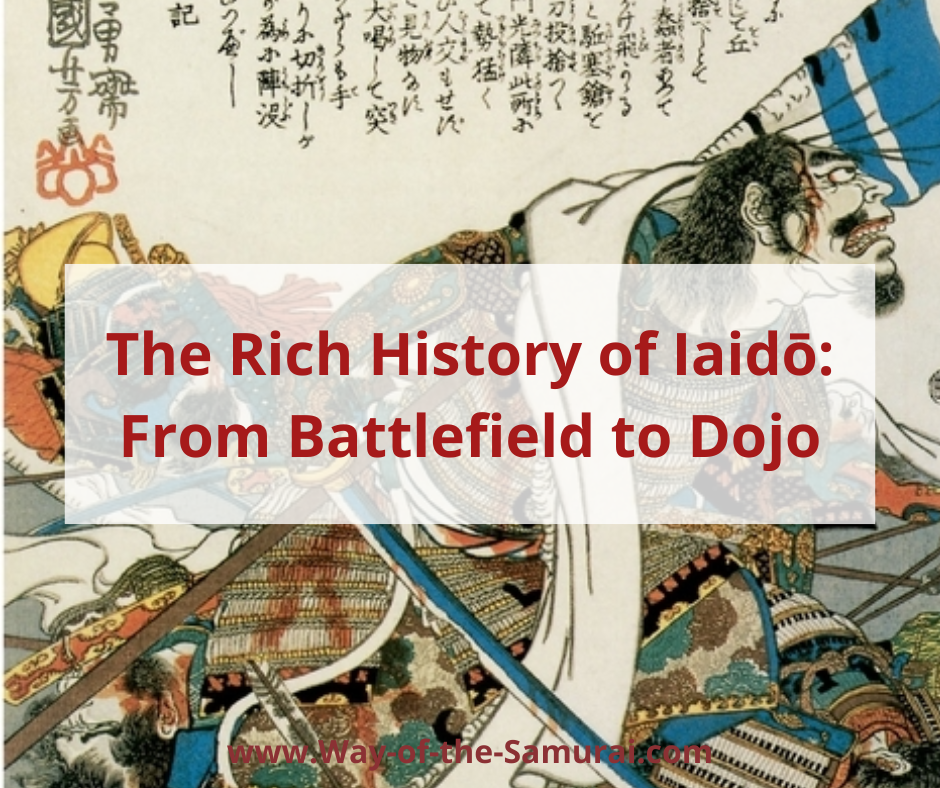
The history of Iaido is as complicated as some of the elegant movements of kata, though the precise attention to detail and meditative quality of kata/waza, might seem far removed from the brutal reality of historical samurai warfare. Yet this seemingly peaceful art has its roots in battlefield necessity, where the ability to draw and cut in a single motion could mean the difference between life and death. In this article, I'll briefly explore how Iaidō evolved from practical combat techniques to the refined martial art we see today.
For a much more detailed account, see my book, "A Short History of Musō Jikiden Eishin-ryū Iaidō".
The Birth of a Tradition: Hayashizaki Jinsuke Shigenobu
The history of Iaido begins in earnest with Hayashizaki Jinsuke Minamoto no Shigenobu (林崎甚助源の重信), who lived from approximately 1542 to 1621 during a time of great upheaval in Japan. According to tradition, Hayashizaki's father was murdered when the boy was young. At age 14, determined to avenge his father's death, he prayed for 100 days at the Hayashizaki Myojin shrine in what is now Yamagata Prefecture.
During this period of intense devotion and practice, he reportedly received divine inspiration for a new method of swordsmanship focused on drawing the sword and cutting in a single motion.
The oldest name of the art, given to it by its founder is “Shinmyō Hijutsu no Junsui Battō” (神妙秘術の純粋抜刀). Others simplify this to Shinmei Muso ryū Battōjutsu (神明夢想流 抜刀術). Later, students would call the art, “Shin Musō Hayashizaki ryū” (神夢想林崎流) in tribute to the founder. Several other variations occur of this in the historical records, including:
- Battōjutsu Shinmei Muso ryū (抜刀術 神明夢想流)
- Hayashizaki ryū (林崎流)
- Jushin ryū (重信流) (Jushin is another way of reading Shigenobu)
- Hayashizaki Shigenobu ryū (林崎甚助源流)
- Shigenobu ryū (重信流)
After developing his skills, he eventually tracked down his father's killer and avenged his death.
While the details of this story may be embellished through centuries of retelling, what's certain is that Hayashizaki established a school of swordsmanship that emphasised the swift drawing of the sword. This was the foundation from which Iaidō would eventually develop.
The Age of Warring States: Practical Origins
To understand the history of Iaido and why Iai techniques were so important, we need to look at the context of the period of it's birth. The late 16th century in Japan was part of the Sengoku Jidai, or "Age of Warring States." During this chaotic period, Japan was fractured into territories controlled by rival warlords, constantly battling for power.
On the battlefield, samurai primarily used spears, bows, and eventually firearms. The sword was often a secondary weapon, but it was essential when other weapons were lost or in close quarters. The ability to draw quickly and counter an unexpected attack could save a warrior's life. Many of these techniques still exist in styles such as Musō Jikiden Eishin-ryū.
During this period, the tachi (a longer sword worn suspended from the belt) began to be replaced by the uchigatana and eventually the katana—swords worn thrust through the belt with the cutting edge facing upward. This new way of carrying the sword allowed for quicker draws and facilitated the development of what would become Iaidō techniques.
The Great Peace: From Combat to Self-Development
Everything changed in 1600 when Tokugawa Ieyasu won the decisive Battle of Sekigahara, establishing what would become the Tokugawa Shogunate. This victory ushered in the Edo period (1603-1868), an era of relative peace that lasted for over 250 years.
During this peaceful time, something interesting happened to the martial arts. With no more battles to fight, samurai needed to maintain their skills and identity as warriors. Martial arts began to evolve from purely practical combat techniques (bujutsu) into ways (budo) that emphasised self-development and spiritual growth.
The famous sword master Yagyū Munenori (1571–1646) expressed this transformation perfectly:
"It is missing the point to think that the martial art is solely in cutting a man down. It is not in cutting people down; it is in killing evil. It is the stratagem of killing the evil of one man and giving life to ten thousand."
- Yagyū Munenori (1)
This shift represents the transition from Setsunin-to (“death-dealing blade”) to Katsunin-ken (“life-giving sword”) - from swordsmanship as a killing art to swordsmanship as a path of personal development. As Alexander Bennett writes in “Bushido Explained”,
“Heiho Kadensho was the first significant treatise in Japan to link the training of body and mind in a martial art into a systematic holistic corpus for life and governance" (2)
Key Figures Who Shaped the History of Iaidō
Several important masters contributed to the development of what we now call Iaidō, particularly from the school I study:
- Hasegawa Chikaranosuke Eishin (1614-1700) became the seventh headmaster of the Hayashizaki lineage in 1610. He transformed many techniques and is credited with developing the tatehiza (half-kneeling) position from which many Iaidō techniques are performed. The school became known as "Hasegawa Eishin-ryu" or simply "Eishin-ryu" in his honour.
- Omori Rokurozaemon Masamitsu was a student of sword and of Ogasawara-ryu etiquette. He developed a set of techniques performed from the formal seated position (seiza) that incorporated proper etiquette and swordsmanship. These techniques eventually became the first set (Omori-ryu) taught to beginners in many Iaidō schools.
- Hayashi Rokudayu Morimasa (1661-1732), the ninth headmaster, brought these teachings to Tosa province (modern Kochi Prefecture) where the art continued to develop. His family would influence the tradition for several generations.
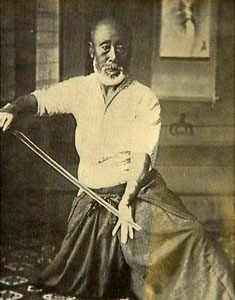
- Oe Masaji (Masamichi) (1852-1927), the seventeenth headmaster (pictured opposite), reorganised the curriculum and officially named the school "Musō Jikiden Eishin ryū." His systematic approach to teaching created the three-level system still used today, with Omori-ryu as the beginning level.
- Nakayama Hakudo (1869-1958) studied both branches of Eishin-ryu and created the Musō Shinden ryū school. He is credited with popularising the term "Iaidō" (replacing older terms like batto-jutsu or iaijutsu) around 1932.
Surviving Modern Challenges: The Meiji Period and Beyond
On March 28th, 1876, the Haitōrei (廃刀令), “The Sword Abolishment Edict“ (廃刀令 / Haitōrei) was issued by the Meiji government of Japan. This was the final step in a series of laws passed by the Meiji government to end the samurai, their arts, and culture.
The first Haitōrei was issued in 1870 and prohibited farmers or merchants from wearing swords and dressing like samurai. The following year, in 1871, the government issued the Danpatsurei Edict, encouraging samurai to cut their top knots (a sign of status) and adopt a Western haircut.
A year later, in 1872, all daimyōs, past and present, were summoned before the Emperor. At this meeting, the Meiji Emperor declared that all domains were now to be returned to him. Roughly 280 domains, including Tosa, were turned into 72 prefectures, each under the control of a state-appointed governor.
Universal military conscription was instituted in 1873, and the Imperial Japanese Army was created. There was no longer any need for samurai. All hereditary stipends provided to the samurai by their formal feudal lords (and assumed by the central government in 1871) were abolished.
And then finally, on March 28th, 1876, the Haitō Edict was passed by the Daijō-kan. Former samurai, now known as shizoku, were banned from carrying swords. And so ended the samurai as a class and created the demarcation line between the koryū and new martial arts called “gendai”.
As a result of these laws, interest in traditional martial arts declined sharply. However, dedicated practitioners continued to train in private, preserving these arts for future generations. Some schools, like the Musō Jikiden Eishin ryū in Tosa, became secretive, limiting instruction to local students only.
By the early 20th century, there was a revival of interest in traditional martial arts, now seen as important cultural heritage rather than practical combat methods. Schools began to open up again, and organisations formed to preserve and promote these arts.
The History of Iaido: Modern Standardisation and Global Spread
After World War II, two major organisations emerged that would shape the modern hsitory of Iaido:
- The All Japan Kendō Federation (AJKF) or Zen Nihon Kendō Renmei (全日本剣道連盟 abbreviated 全剣連 Zen Ken Ren, ZNKR) incorporated Iaidō into its curriculum in the 1950s. The federation created a standardised set of Iaidō forms called Seitei Iai (later Zen Ken Ren Iai), which consists of forms drawn from different schools. This standardised curriculum has helped make Iaidō more accessible to beginners.
- The All Japan Iaidō Federation (全日本居合道連盟 Zen Nippon Iaidō Renmei / ZNIR), founded by Kōno Hyakuren, (February 19th, 1898 - May 20th, 1974), 20th Headmaster of Musō Jikiden Eishin ryū.
With the future Prime Minister of Japan (1960 to 1964), Hayato Ikeda (池田 勇人, 3rd December 1899 – 13th August 1965) as its 1st chairman, it focuses more specifically on traditional schools, particularly Musō Jikiden Eishin ryū. This organisation maintains closer ties to the traditional curriculum.
Today, Iaidō is practised worldwide, with dedicated practitioners on every continent. While still not as widely known as karate or judo, Iaidō continues to attract people interested in Japanese culture, meditation, and self-development.
The Living History of Iaido Today
Modern Iaidō represents a living connection to Japan's samurai heritage. When you begin Iaidō training, you're stepping into a tradition that has been passed from teacher to student for over 400 years.
What makes Iaidō remarkable is how little the core techniques have changed over centuries. The same precise movements practised today can be seen in old illustrations and texts. This continuity creates a profound connection to the past - when you perform a kata, you're moving in ways that samurai moved centuries ago.
At the same time, as seen in the history of Iaido, it has evolved to meet contemporary needs. Modern practitioners find that Iaidō helps them develop focus and mindfulness in an age of constant distraction. The emphasis on proper posture offers a counterbalance to hours spent hunched over desks and devices.
Learning from the History of Iaido
As a beginner approaching Iaidō, what can you take from this rich history of Iaido?
First, understand that Iaidō has always balanced practicality with spiritual development. Even in its earliest days, it wasn't just about combat effectiveness but also about cultivating awareness, discipline, and character.
Second, recognise that the seemingly formal aspects of Iaidō - the precise movements, the etiquette, the attention to detail - are not arbitrary but developed for good reasons. They represent centuries of refinement by dedicated practitioners.
Finally, appreciate that Iaidō offers a unique window into Japanese culture and history. Through practising these forms, you gain insight into the values, aesthetics, and worldview that shaped samurai society.
Beginning Your Own Iaidō Story
Every Iaidō practitioner becomes a small part of this continuing history of Iaido. Whether you practice for physical benefits, mental focus, cultural interest, or spiritual development, you're helping to preserve and evolve this remarkable art.
As you begin your training, take a moment to appreciate the generations of practitioners who refined these techniques and passed them down. Their dedication created the opportunity for you to experience this art today.
Remember also that all masters were once beginners. The most skilled sensei (teachers) once struggled with basic movements just as new students do today. What distinguished them was not natural talent but persistent practice and sincere dedication - qualities that remain the foundation of Iaidō training.
The story of Iaidō continues to unfold, and now you have the opportunity to add your own chapter to this living tradition. As the Japanese saying goes: "Ichi-nichi-issho" (一日一生) (one day, one lifetime) - each day of practice is a lifetime of learning, and each moment on the path of the sword is connected to its rich history.
"“By realizing the meaning of life through the sword and further deepening one's understanding of the principles of heaven and earth, one can attain the truth of the universe."
- Kamo Jisaku Sensei (3)
If you'd like to train in authentic Japanese Martial Arts, those same warrior skills developed by the samurai, check out my dojo at DublinKendo.com
- - - -
If you want to get in great physical, mental and emotional shape using the same principles and techniques inspired by the feudal warriors and healers of Japan, check out my Samurai Strength Programs.
References
- Yagyū, Munenori. The Life-Giving Sword: Secret Teachings from the House of the Shogun. Translated by William Scott Wilson, Kodansha International, 2003
- Bennett, Alexander, and Baptiste Tavernier (illustrator). Bushido Explained: The Japanese Samurai Code: A New Interpretation for Beginners. Tuttle Publishing, 2020,
- Kamo, Jisaku. 無双直伝英信流居合道 [Musō Jikiden Eishin-ryū Iaido]. 愛隆堂, August 1998.
You've been reading a very brief History of Iaido. Check out my first impressions of Iaido here.
Click here to return to the Way of the Samurai Home Page.
You might like these
Iaido - The Art of Japanese Swordsmanship
Iaido - The Art of Japanese Swordsmanship
Iaido FAQ
Iaido FAQ - A Q and A for the Beginner
Oe Masamichi and Iai - A Translated Excerpt
Oe Masamichi and Iai - A Translated Excerpt from the Koryu Iai No Hondo
About the Author

Paul Batman O’Brien is passionate about sharing the wisdom of martial arts to help solve our daily problems. He teaches both gendai (modern) and koryu (classical) Japanese martial traditions for Dublin Kendo Kobukai, holding 5th Dan in Iaido, 4th Dan in Jodo, and serving as dojo leader for Hyōhō Niten Ichi Ryū in Ireland.
With over 40 years in martial arts and 20+ teaching, he is a multi-time international medalist, and has represented Ireland at the European Championships for both Iaido and Jodo many times.
He was a lead writer for Irish Fighter Magazine for over 15 years, with over 100 published articles and is the author of multiple books on martial arts, strength and fitness, eastern medicine, and philosophy.
When not teaching martial arts, he owns and operates the Meridian Acupuncture Clinic.


Free Samurai E-books
Get Free Exclusive Samurai Guides and E-books
Subscribe Now
My Best Selling Samurai Fitness Program
Top Viewed Pages